New Jersey rules, in plain words
Before you hire a roofer: registration, contracts and town paperwork
Roof work in New Jersey touches a registration system, a written-contract rule and, for some jobs, a town permit. Each section below says what an official page says and nothing more. Slate Verona Roofing connects callers with a separate local roofing contractor, so the registration number and the insurance certificate to ask for belong to that contractor.
A registration number and what it stands for
New Jersey's Division of Consumer Affairs keeps a registry of home improvement contractors. State rules call for registration with the Division before anyone sells or carries out home improvement work in New Jersey, or advertises as a contractor. The Division's FAQ calls the program mandatory and says the state registration stands in for licensing by individual towns, while local construction permits still apply.
Certain people are exempt, such as some state licensees and anyone working on a relative's home. The FAQ does not name roofing, so the contractor is the one to ask how registration applies to the job.
Looking a contractor up
The Division operates an online lookup called the License Verification System. Its welcome page includes home improvement contractors among the business licensees it covers, so a business search is where to begin. The page does not say whether a search works by name, by number or both.
The FAQ adds that a registered contractor's number has to show prominently in advertising, on cards and commercial vehicles, and on business paperwork. It also names $500,000 per occurrence as the minimum commercial general liability coverage, carried in the contractor's own name.
What a written contract holds
A home improvement contract over $500 goes in writing, and so does any change to it; every party signs. The document names the seller and gives a legal address. It describes the work with the main products and materials, states the total price (or an hourly labor rate on a time-and-materials job) and gives start and finish dates or a period of time. It also describes any financing security interest and any written promise the seller makes about the work.
Work may not begin until the required permits are issued, and the seller may not ask for final payment until the job is complete.
Final payment waits for the final inspection
Verona's building FAQ says final inspections confirm that the work meets code, and that contractors are not to be given final payment until the work passes. Permits also have to be closed out before a home is sold. The state's contract rule adds a step: where midpoint or final inspections apply, the seller hands the buyer copies of the certificates when construction ends and before final payment falls due.
When no permit is needed: ordinary maintenance
A 2018 notice from the Department of Community Affairs places roofing work on a house standing alone with one or two dwelling units in the ordinary maintenance category. The wording covers any amount of existing roof covering, a complete replacement included. For ordinary maintenance, the notice says, no permit is required and no inspections take place.
Two limits apply. The same notice says the label does not excuse anyone from meeting the code, and the regulation leaves out any work that affects structural or fire safety. Attached dwellings are not addressed, so a townhouse owner can ask the town's construction office.
Verona's own words on roofs
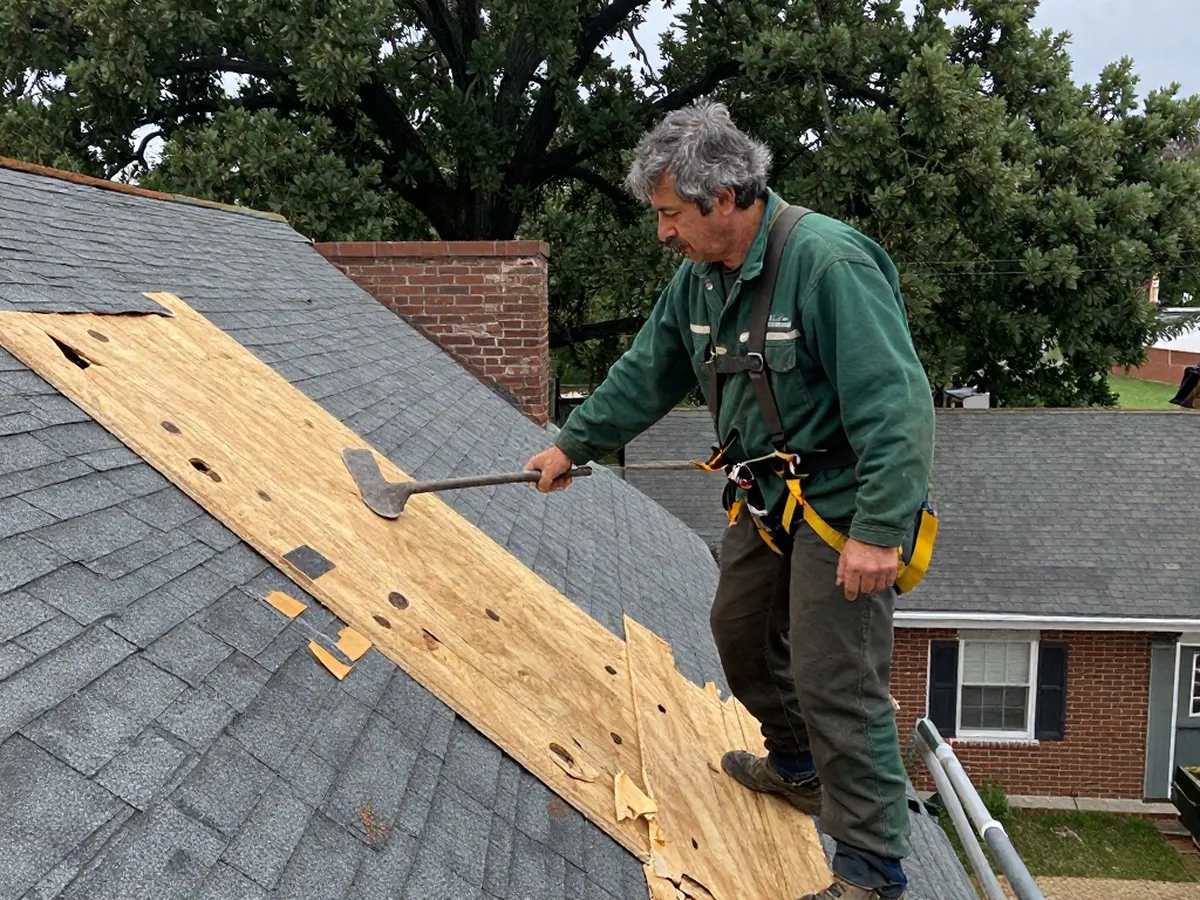
In Verona, a shingles-only job on a home sheltering one or two families is exempt from a permit; repairing or replacing the sheathing is not. The permit is a joint job for the owner and the contractor, and work done without one brings monetary penalties under the state code.
Emergency repairs may start before a permit, with the permit obtained within 72 hours and a call to the Building Department to be placed on its Emergency Work List. Township inspectors do not recommend contractors. Contractor complaints go to the Division of Consumer Affairs. Construction hours are Monday to Friday, 7 AM to 6 PM, and Saturday, 8:30 AM to 4:30 PM. Sunday work is not permitted.
The building office in each of the four towns
| Town | Office | Phone | Hours on the town's page | What the page says |
|---|---|---|---|---|
| Verona | Construction Code Enforcement, Verona Community Center, 880 Bloomfield Ave., Verona 07044 | (973) 857-4834; the FAQ lists 973-857-4835 for scheduling inspections by phone | Monday to Friday, 8:30 AM to 4:30 PM | No permit for replacing shingles only on a one- or two-family house; sheathing work needs one. Emergency repairs can start first, with the permit within 72 hours. |
| Cedar Grove | Building Department, 525 Pompton Avenue, Cedar Grove 07009 | 973-239-1410, ext. 246 | Not listed on the page | The page says nearly every change to a property calls for a permit and advises a call when in doubt. Inspections are by appointment. No cash for permits. Roofing is not mentioned. |
| North Caldwell | Construction Department, Borough Hall, 141 Gould Ave, North Caldwell 07006 | 973-228-6410, ext. 120 | Not listed on the page | The department covers building permits, inspections and code compliance. No roofing statement and no fee amounts are given. |
| West Orange | 66 Main St., Room 217, West Orange 07052 (Building and Construction Code Enforcement) | (973) 325-4112 | Weekdays from 8:30 until 4:30 (inspections 9:30 to 12 and 1 to 4) | Inspection requests go through an online form, not by phone. Penalties start at $2,000 for skipping required rough and final inspections. Roofing is not mentioned. |
The code editions adopted on 17 August 2026
The state's code page names the 2024 International Building Code and the 2024 International Residential Code, in New Jersey editions adopted 17 August 2026, and says its rehabilitation subcode is updated as necessary. The page shows no grace period. For a job that is already under way or only planned, the construction office can say which edition applies.
A claim, a contractor and who chooses
The Department of Banking and Insurance suggests these first steps after storm damage: tell the insurer promptly, keep the property from getting worse, hold on to receipts and take photographs before throwing anything out. A policyholder does not have to hire the contractor the insurer recommends, and no public adjuster is required to file or settle a claim. A consumer hotline, 1-800-446-7467, answers weekdays from 8:30 AM to 5 PM Eastern.
A standard policy leaves out flood damage, and flood insurance does not take effect until 30 days after purchase, according to the page. What any one policy covers is not stated there.
Three days to cancel, with exceptions
The exceptions include emergencies and repair or maintenance visits that the buyer requested, though extras bought beyond that request are covered. A seller covered by the rule has to say so at the time of the sale and give two copies of a cancellation form.
One folder for the roof's paper trail
The National Park Service advises keeping a log of repairs and invoices. The insurance department says to save receipts. Verona's FAQ says permits have to be closed out to sell a house, and the state's contract rule says inspection certificates reach the buyer before final payment. Together that adds up to one folder holding the signed contract, permit papers, inspection certificates, receipts and dated photos.
Talking it over before you sign
Call (862) 396-4866 and explain the paperwork question, along with what the roof is doing. Bring the street address and the town. Tenants take the questions to the landlord, since roof work is the owner's call.