An aging roof and repeat leaks in Verona
Roof Replacement in Verona, NJ
A roof that leaks in a new place after every repair, sheds its gritty top coat or has cracked, curling shingles may be near the end of its run. Call (862) 396-4866 about a visit to study the whole roof, not only the stain.
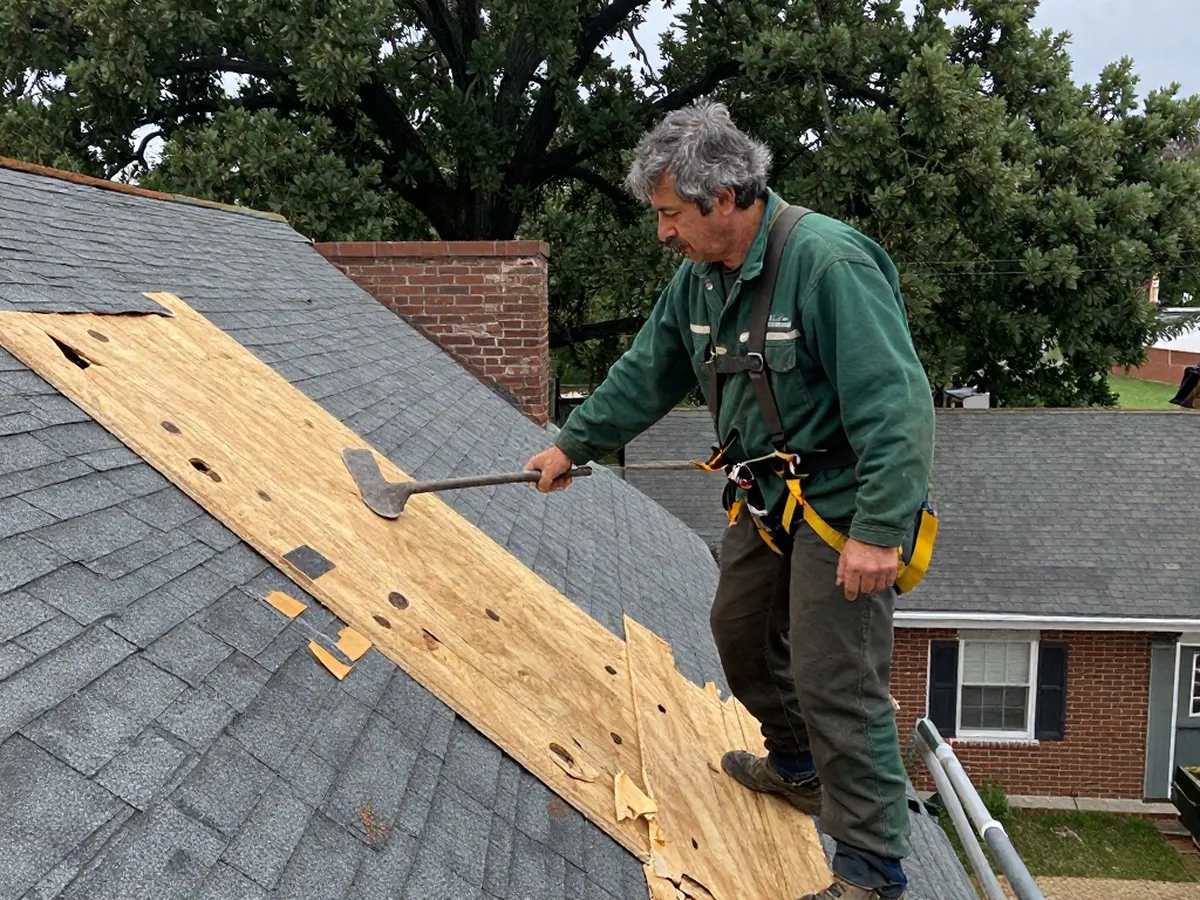
What changes the size of the job
What stretches or shrinks a reroofing job
Roof area and pitch come first, followed by the number of layers to remove, how much of the deck needs repair and how many dormers, valleys and chimneys interrupt the surface. Ventilation work and an ice membrane along the eaves add scope. Material changes the picture most. The National Park Service says properly installed slate lasts 60 to 125 years or longer, and that its metal flashings often wear out before the slate does. Asphalt shingles run on a different clock, which is why the roof's age is the first thing worth knowing before a call.
Stop and step back if
- A bulging or drooping ceiling, or water at a ceiling light: leave that room and call 911.
- A roof section that visibly sags or moves in the wind: keep everyone out of the rooms below and call 911.
- A wire down, or limbs resting on lines after wind: stay well back and call 911 or your electric company.
- An old roof that is wet, icy or steep: do not climb it, and do not lean a ladder on a loose gutter.
This job and its partner
Where a patch stops making sense
Two published rules of thumb point in different directions. The Energy Department's repair brief quotes a trade field guide: once repairs reach beyond a tenth of an old roof's surface, a replacement starts to make sense. For historic slate, the Park Service puts the line near a fifth of the slates damaged or displaced, past which replacement is often the sounder course. Slate and asphalt are different materials, which is why the figures differ. Neither is a verdict on a particular roof, so a contractor has to apply them to yours. Roof leak repair covers the repair side, and the repair or replace page sets the two out together.
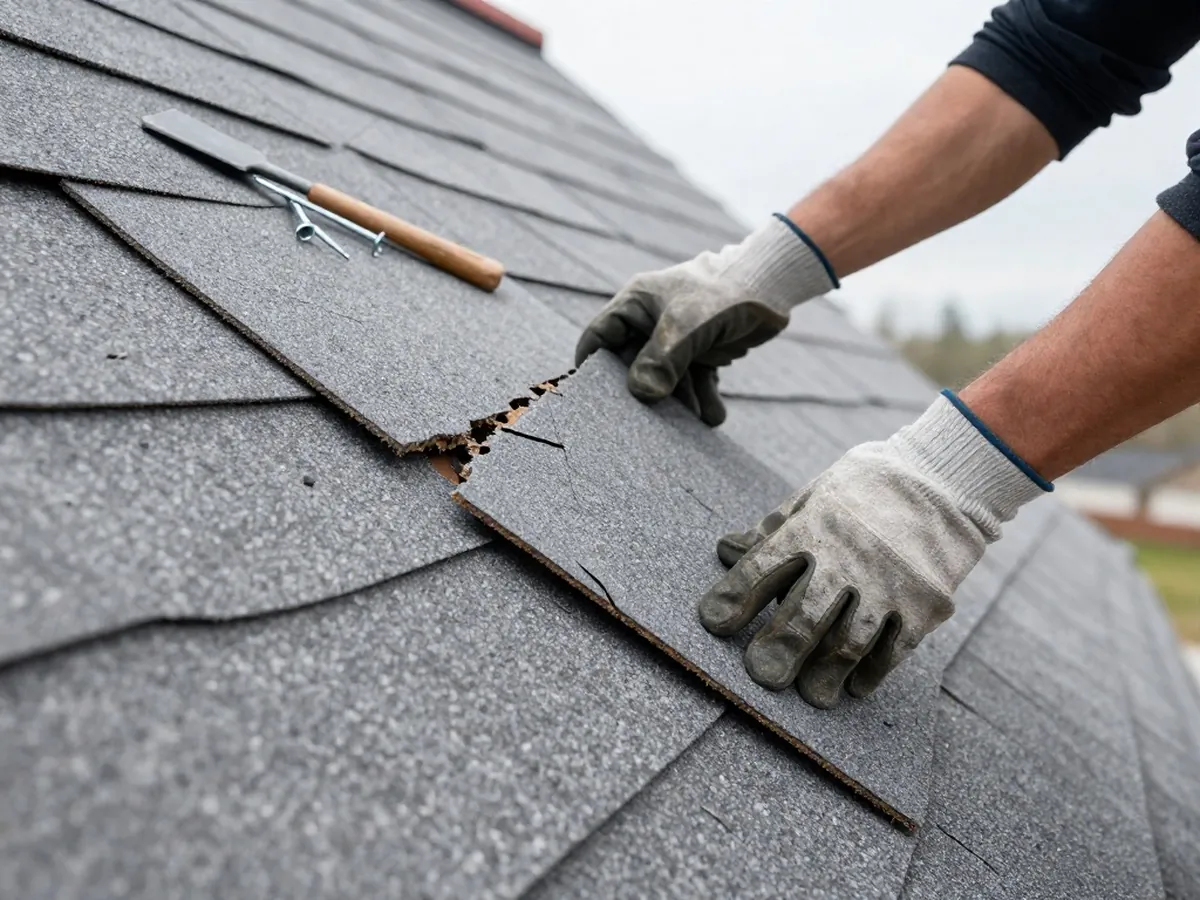
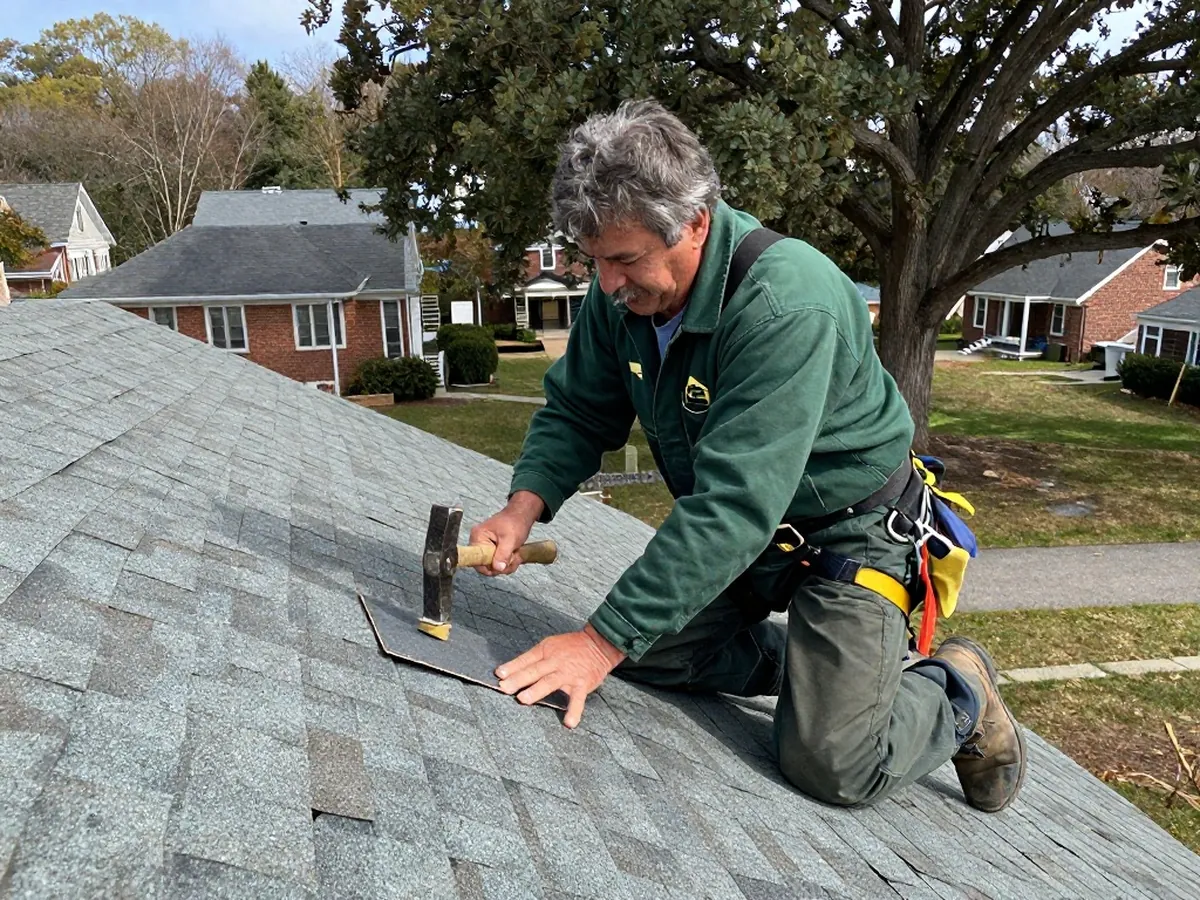
What to look at
What a tear-off exposes
Once the old shingles come off, the deck is bare, and it is the clearest moment to see soft or stained boards. New work goes back in order: underlayment, drip edge, shingles, then the ridge. Fastening decides how a roof behaves in wind. FEMA's high-wind shingle sheet calls for roofing nails rather than staples and for underlayment beneath the shingles. It is written for coastal regions, so read it as a benchmark and not as a Verona requirement.
On a visit, in order
- 1
Call (862) 396-4866, say where it leaks and the roof's age if anyone knows it, and ask for the whole roof to be looked at.
- 2
The contractor can walk the attic first, checking the underside of the deck for stains and soft boards, and noting any daylight that does not belong.
- 3
Outside, the look counts the shingle layers, checks how the ridge and edges are finished and notes any wear on the drip edge and flashing.
- 4
Ventilation is part of the picture too, meaning intake at the eaves and an exhaust path at the ridge, which affects how an attic handles summer heat and winter moisture.
- 5
The contractor can set out the options, from patching to a full tear-off and new covering, with what each choice leaves for later.
- 6
Paperwork is the last item: how state rules treat a reroof and how Verona handles sheathing work. The paperwork page explains both.
The parts involved
The layers, from the deck up
The deck is the base. Above it sits underlayment; the Energy brief describes either a single layer of 30-pound felt overlapped by at least 2 inches or a pair of 15-pound layers. At the eaves, drip edge steers water into the gutter. For places prone to ice dams, the Building America guide calls self-adhering membrane good practice around valleys, eaves, hips, dormers and chimney penetrations. The shingles and ridge pieces finish the surface.
Signs to look for
- A leak that moves to a different spot after each repair
- Cracked, curled or lifting shingle edges seen from a window
- Bare patches where the gritty top coat has washed off
- A roof line that dips or feels soft when seen from across the street
- Stains on attic boards in several areas, not just one
Paperwork pointer
Paperwork for a whole new roof
For a house standing alone, New Jersey's rule on ordinary maintenance covers a complete reroof, and such work carries neither a permit nor an inspection. The state's notice still expects the work to meet the code. Verona's own FAQ draws its line differently: shingles alone are exempt, sheathing work is not. Attached houses are not addressed in the notice. A job over $500 needs a written contract as well. The paperwork page lays these out.
Have this ready
Write down the address, what is visible from the ground and the roof's age if known, then call (862) 396-4866. Tenants start with the landlord. Towns covered: Verona, Cedar Grove, North Caldwell, West Orange.