Ice at the eaves and drips after a thaw
Ice Dam Damage in Verona, NJ
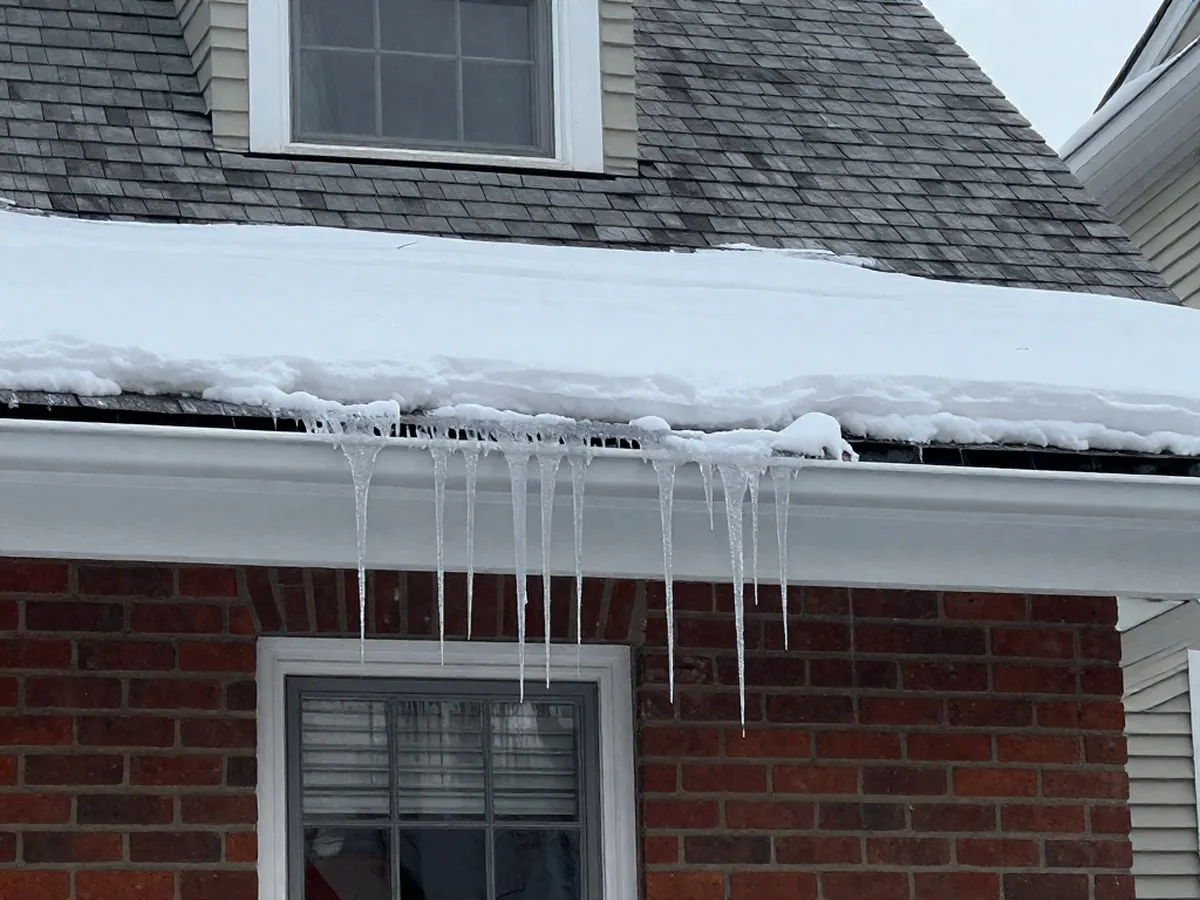
Ice piled along the lowest edge of the roof, icicles that keep thickening or stains that show up during a thaw can mean melted snow is refreezing at the eave. Water then backs up under the shingles. Call (862) 396-4866 about a visit to check the roof and the attic.
What changes the size of the job
What makes ice damage bigger
Time is the main variable: how long water has been backing up under the shingles, and how much insulation and ceiling finish got wet. UMass calls weak insulation and air sealing the root problem and points out that deep snow insulates the roof, holding indoor heat against the boards. For the northern United States it advises R-38 or more in the ceiling. Removing ice treats the symptom, and a contractor can say whether the attic side needs work as well. The Energy brief adds that wet insulation comes out so a ceiling can dry.
Stop and step back if
- A ceiling that sags or bulges during a thaw: leave the room and call 911.
- A sheet of ice or a long icicle hanging above an entry or a path: keep people and animals out of the drop zone beneath it.
- Water seeping toward a light fixture or an outlet: keep out of that room, then call 911.
- Do not hammer at ice or climb onto a snowy roof; the UMass guide says chipping harms people and roofs.
This job and its partner
Ice, gutters and what heat tape does
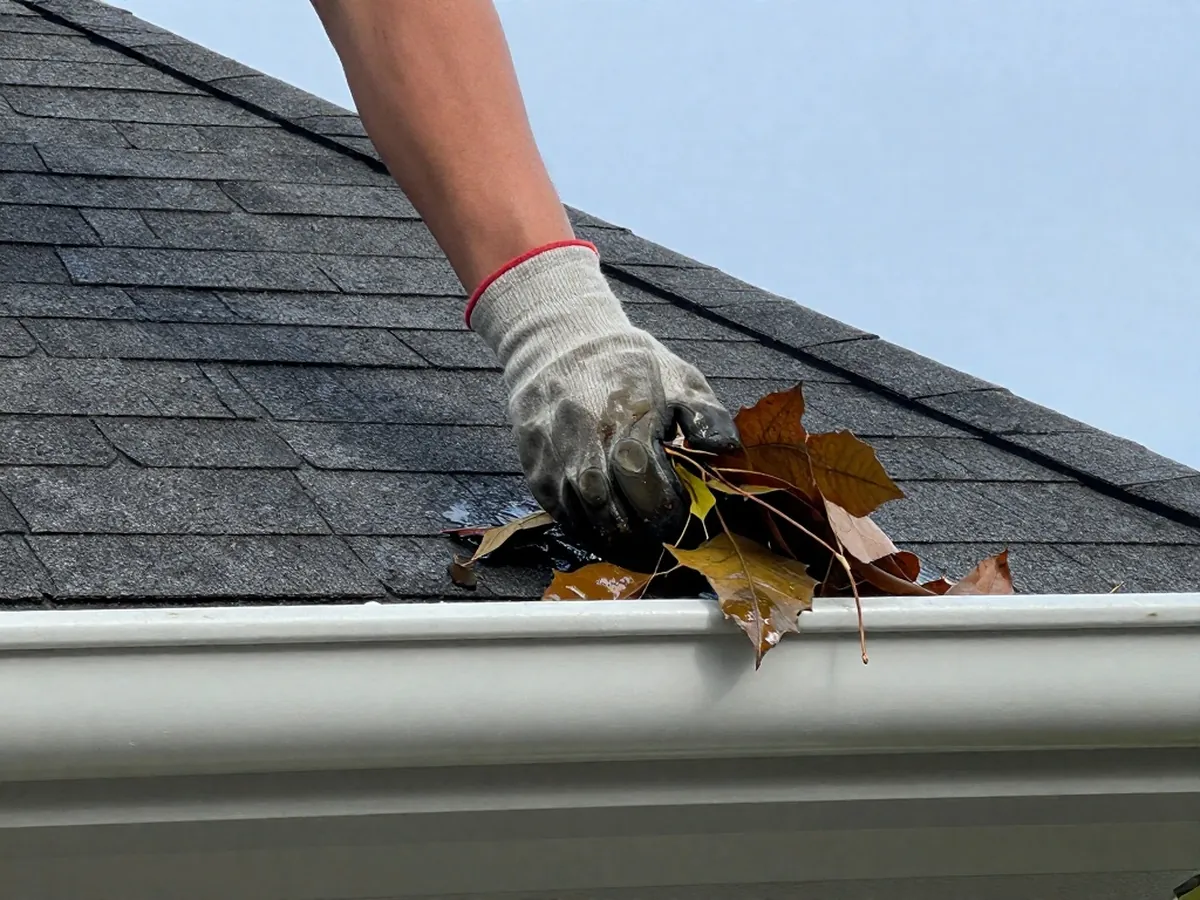
Electric heat cable looks like a remedy. The UMass guide's author has never seen it cure an ice dam, says it creates a new dam just above itself, and warns that it can embrittle shingles, pose a fire risk and leak through loose fasteners. On gutters, the guide says they do not cause ice dams, although a full one can bend under the ice. For the gutter side, see gutter repair. For the roof, the attic is the usual place to look.
What to look at
How the ridge of ice builds, step by step
In winter the house leaks warmth into the attic, and that warmth heats the roof deck and melts the snow lying on the upper roof. The meltwater runs down toward the overhang, which stays cold, and freezes again. As the ice builds, new meltwater is stuck behind it and works its way under the shingles. The Caldwell airport weather station shows the daily swing in its 1991-2020 normals: January averages 38.3 degrees at the high and 22.9 at the low, February 41.4 and 23.9. Days above freezing and nights below it keep the cycle going.
On a visit, in order
- 1
Call (862) 396-4866, say where the ice builds and where water shows inside, and ask for someone to come and look.
- 2
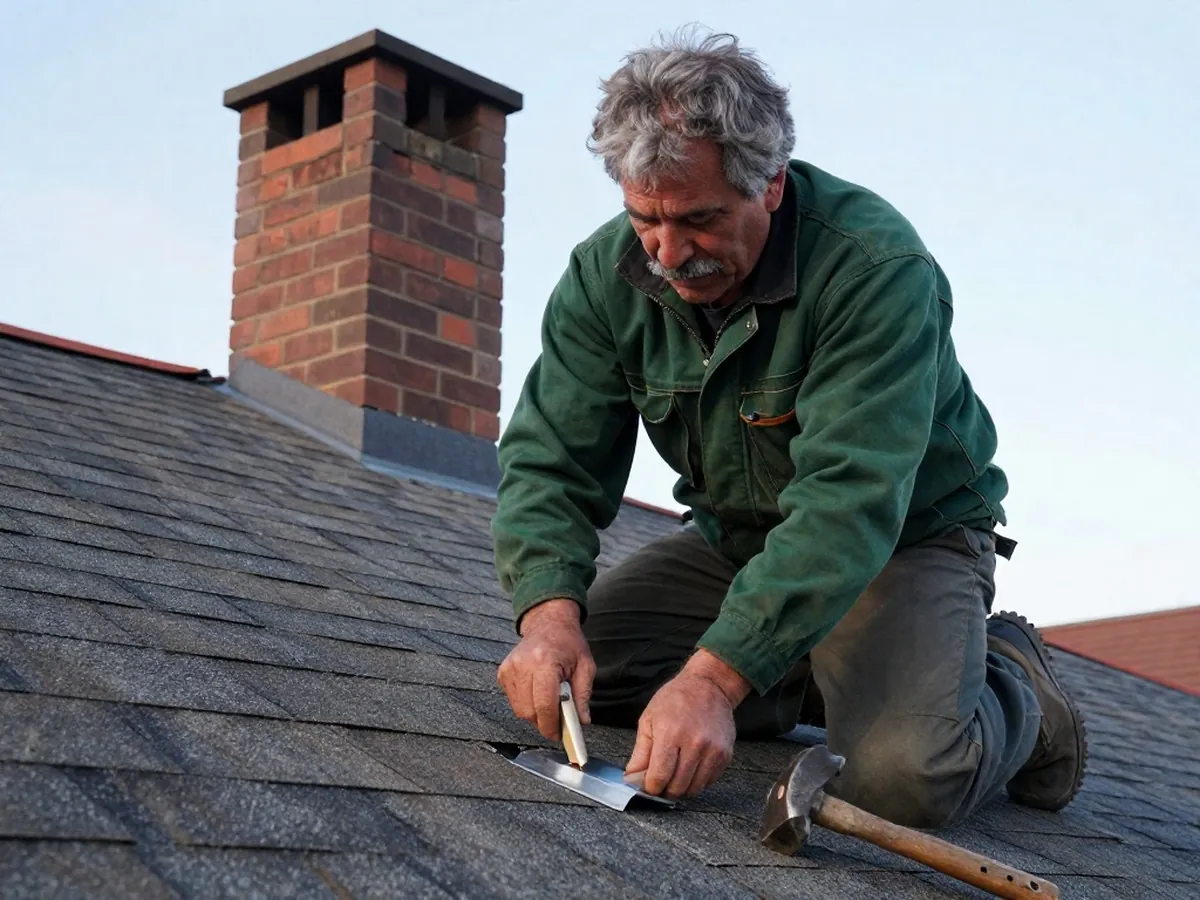
Along the eave, a contractor can check shingle tabs for lifting, look for water marks and note the state of the gutters.
- 3
In the attic, the look moves to the ceiling plane: gaps around light fixtures, the attic hatch, chimneys and pipes where warm room air can leak upward.
- 4
Insulation depth can be checked, along with how the soffit and ridge vents move air; the Building America guide calls for venting at every rafter bay.
- 5
The contractor can explain the options, which may include sealing air leaks, adding insulation, clearing vents or adding a membrane at the eaves during the next roof job.
- 6
For paperwork, the paperwork page notes what the state's ice-barrier bulletin says and whom to ask.
The parts involved
Air, insulation, vents and the eave
The Building America guide puts air sealing first: close the gaps that let warm air rise from the rooms below into the attic, then insulate the ceiling plane. Venting comes next, with every rafter bay vented at the intake side and at least a 2-inch space above the insulation. UMass calls soffit-to-ridge venting the most effective scheme. At the eave itself, the guide calls self-adhering membrane standard practice around ice-dam-prone areas. Each part helps the others.
Signs to look for
- A thick ridge of ice along the lowest edge of the roof
- Icicles that grow longer and thicker from week to week
- Ceiling or wall stains that appear during a thaw, not a summer rain
- Gutters packed with ice, bent or pulling away from the house
- Frost or damp patches on the attic side of the roof boards
Paperwork pointer
What the state says about ice barriers
A state bulletin on ice dam membranes, last revised in June 2015, says the building subcodes for one- and two-family dwellings require a membrane under the roof covering in areas where January's daily average runs 25 degrees Fahrenheit or colder. It names Sussex County. The Caldwell airport normals put January's average at 30.6 degrees. New model code editions took effect on 17 August 2026, so the construction office can say how the rule applies at your address. The paperwork page has the offices.
Have this ready
Write down the address, what is visible from the ground and the roof's age if known, then call (862) 396-4866. Tenants start with the landlord. Towns covered: Verona, Cedar Grove, North Caldwell, West Orange.